
What is Gaslighting? Recognizing the Signs & How to Respond
You walk away from a conversation, and that familiar, heavy knot twists in your stomach.
You find yourself mentally rewinding everything that was just said, asking yourself, Did I really say that? Am I just overreacting? Maybe it actually is all my fault.
If you constantly feel like you are losing your grip on reality within a certain relationship, you are not alone. You might be experiencing a disorienting relational dynamic that we hear a lot about today: gaslighting.
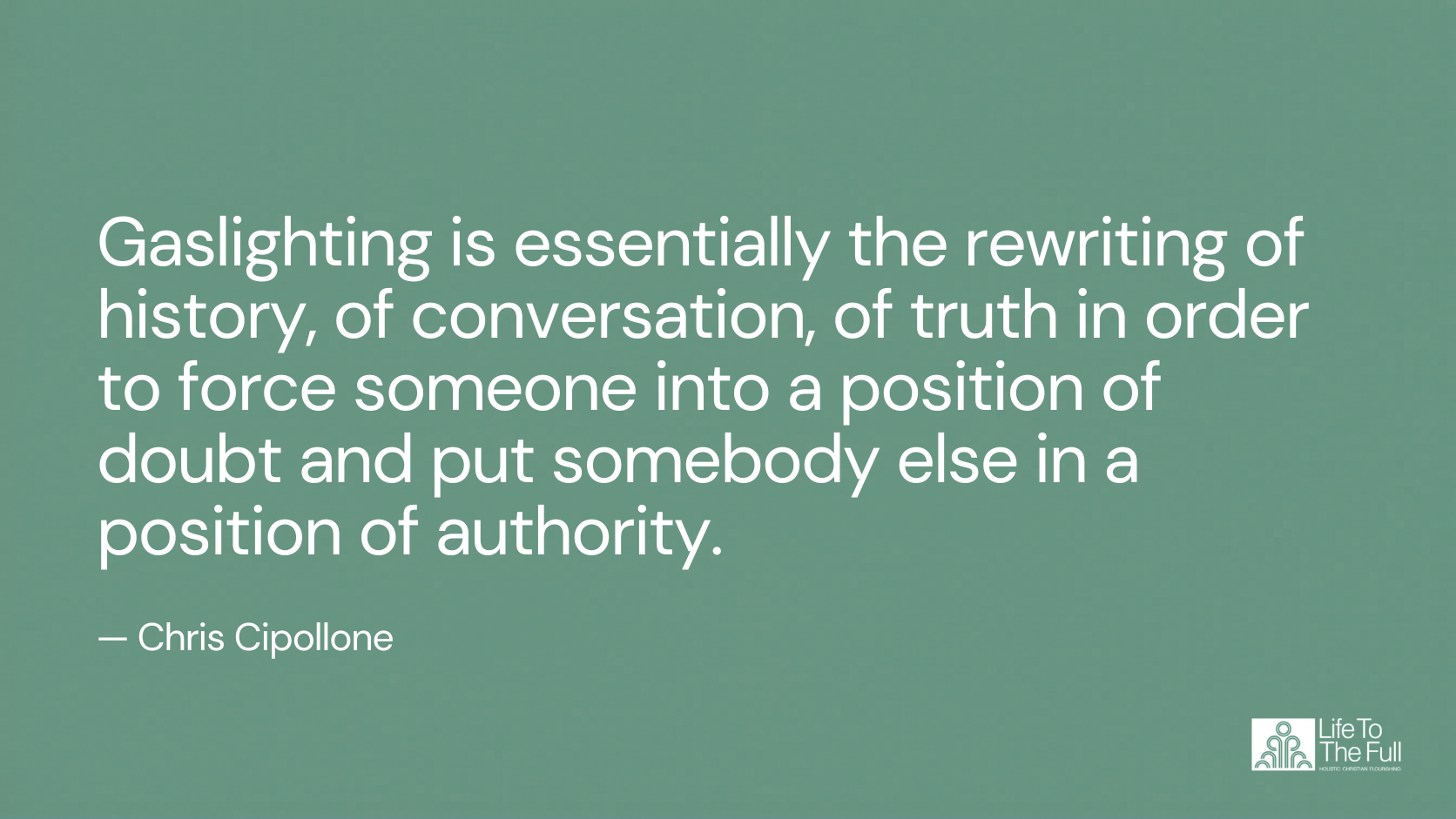
Gaslighting is a word that gets thrown around a lot in modern conversations, almost like narcissism, but it is a very real clinical issue. Essentially, it is the rewriting of history, of conversation, or of truth in order to force someone into a position of doubt and put somebody else in a position of authority.
This deception often comes from someone being defensive, proud, or insecure, and it unfairly puts the responsibility entirely on you.
The Line Between Miscommunication and Manipulation
How can you tell the difference between a difficult miscommunication, which happens to all of us, and actual psychological harm?
The key is looking for whether the behavior is sustained and repeated, and whether it consistently ends with the result that the blame is always placed on you.
When evaluating these interactions, there are four primary red flags to look out for:
The complete denial of events: The person might completely deny that something even happened in the first place.
If you say they hurt you, they might respond with, "What are you talking about?" as a form of fight or flight to avoid the conflict.Minimizing your experience: Sometimes, they will acknowledge the event happened, but tell you that you are being "too sensitive" or that you are overreacting about it.
Shifting the responsibility: They might admit it happened, but disagree with what caused it, twisting the narrative so that the fault lands squarely on you.
Somatic and emotional responses: You might notice physical responses, like feeling very nervous in your stomach every time you see them, alongside a deep confusion where you do not even know what is true anymore.
This constant rumination often leads to an overactive mind, increased anxiety, and eventually a sort of burnout or depression.
Untangling Grace and Truth
For those of us coming from a Christian framework, these dynamics bring up huge questions about boundaries and forgiveness.
It is easy to mistakenly believe that enduring manipulation is simply an act of grace. However, grace only makes sense in light of justice.
| The Internal Conflict (What We Fear) | The Healing Reality (What Is True) |
|---|---|
| "Grace means pretending it never happened." | Grace requires truth. God cannot be gracious toward something that never happened; truth and justice matter to God, and reclaiming the integrity of what actually happened is important. |
| "Forgiveness means staying silent." | Honesty is essential. Revealing the issue gives the person an opportunity to change; it is a Christian thing to do to say, "You are transgressing against me". |
| "Setting boundaries is unloving." | Boundaries protect peace. We can set an easy, quick boundary in a way that is still loving and does not dishonor or slander the other person. |
| "I must endure harm indefinitely." | Commitment requires mutual work. Intimate bonds like marriage take more commitment to work through, often requiring couples counseling to address the destructive patterns rather than ignoring them. |
4 Practical Steps to Ground Yourself
Living in a reality that is constantly being questioned is incredibly draining. If you are feeling uneasy or disoriented in the heat of the moment, here are four actionable steps to protect your peace:
Take a time-out to breathe: If the situation is stressful and you know it is not going to end well, give yourself permission to withdraw for a few moments and center yourself with breathing exercises.
Journal the events immediately: Your memory will be no better than straight after the event. Jot down exactly what was said, how they communicated it (were they calm or angry?), and the impact on your body and mind.
Doing this helps you process the conversation and spot long-term patterns over time.Attempt a gentle confrontation: Because some people are genuinely just defensive rather than clinical, try a gentle reset.
Saying, "Actually, I don't think that is what happened," or "I don't think this is all my fault," gives them a chance to respond well before you assume the worst.Observe their reaction: Pay attention to how they handle your feedback. If they continually react with pride, anger, or defensiveness when confronted, you probably need to escalate the situation to professional counselling.
Finding Support and Restoring Your Peace
If you find yourself stuck in this draining cycle, you do not have to figure it out on your own. Admitting that your reality feels twisted takes immense courage, and reaching out for support is the best thing you can do for your mind and body.
At Life To The Full, our multidisciplinary team of counsellors, psychologists, and spiritual directors is equipped to meet you exactly where you are. Whether you prefer the warmth of an in-person session or the comfort of online support, we are here to help you unpack these heavy dynamics, establish healthy boundaries, and restore your peace.