
Have you ever felt a sudden rush of anxiety, a tight knot in your chest, or unexplained exhaustion, even when your mind tells you that everything is fine?
Sometimes, you can talk through your past, pray for peace, and read all the right books, yet your body still feels stuck on high alert.
If this sounds familiar, you aren't failing at healing. Your nervous system might simply be holding onto a story that words alone cannot resolve.
When traditional counselling reaches a plateau, somatic (body-based) modalities can step in to bridge the gap.
Understanding the Roots of EMDR
Traditional talk-based therapies (like Cognitive Behavioral Therapy) are incredibly helpful, but they represent just one branch of clinical care.
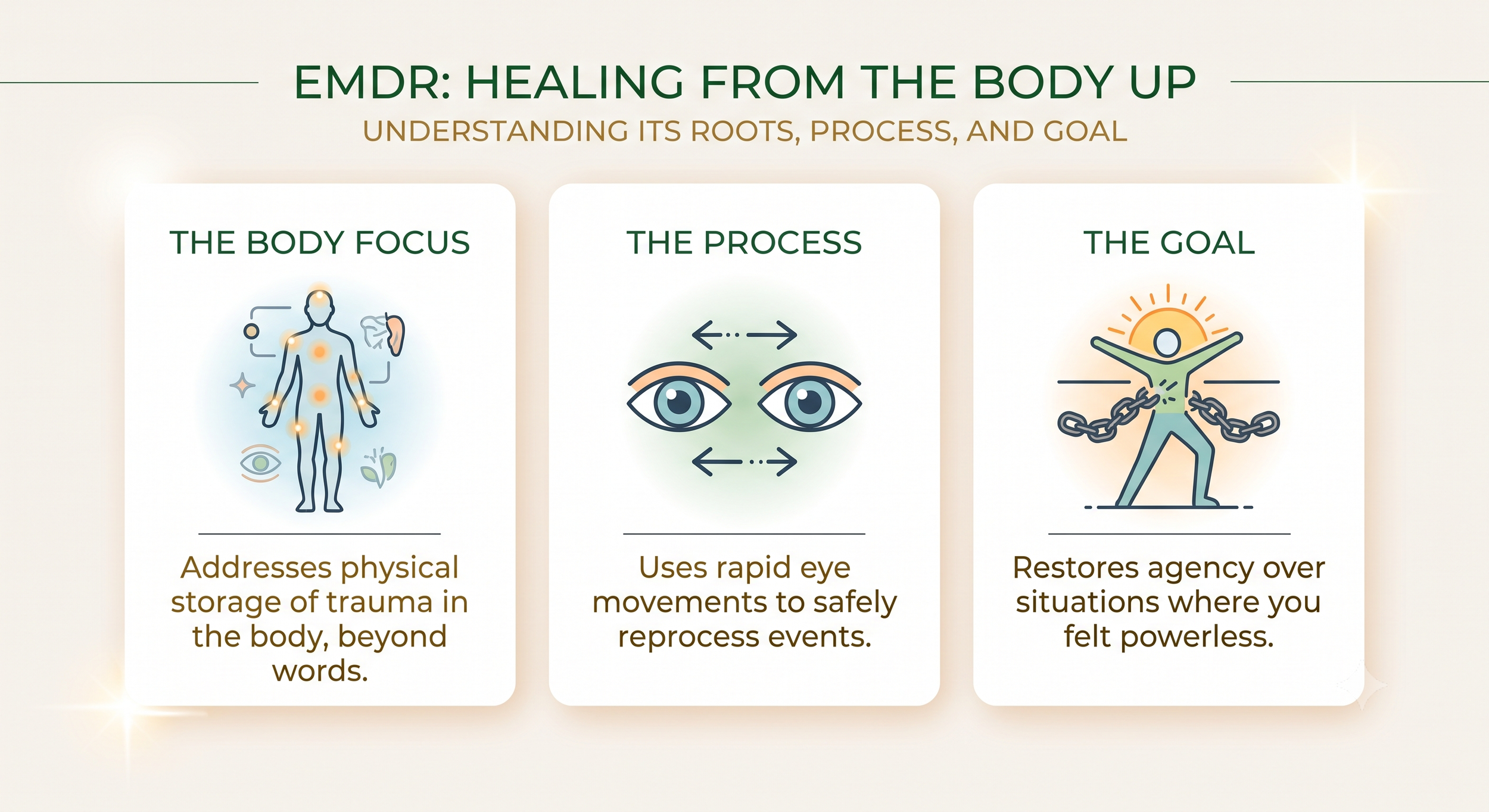
EMDR belongs to a different branch known as somatically based therapy. Here is how it works:
The Body Focus: The word "somatic" comes from the Greek word for body. Instead of just talking through a memory, EMDR addresses how the body physically holds onto it.
The Process: It utilizes rapid eye movements to help you safely revisit and reprocess traumatic events.
The Goal: This process is designed to give you a renewed sense of agency over situations where you originally felt powerless to create change.
How to Spot the Symptoms of Unhealed Trauma
Unhealed trauma takes a subtle but profound toll on the body. Chris points out several clinical indicators that show when trauma is impacting your nervous system and when a somatic approach like EMDR might be necessary:
Involuntary Physical Responses: You might experience sudden, unexpected tears when certain topics arise, which is a primary indicator for clinicians that your body is physically storing an unresolved traumatic moment.
Chronic Fatigue and Burnout: When your nervous system remains perpetually unregulated, the constant underlying physical tension can eventually lead to severe exhaustion, heightened stress, and depressive episodes.
Feeling Easily Flooded: You may notice your resilience dropping, finding yourself easily overwhelmed or triggered by present situations that echo past childhood dysfunction or traumatic events.
Hitting a Plateau in Therapy: You have actively engaged in traditional talk-based therapy, but it feels like you still haven't quite reached the core of the problem.
Untangling the Spiritual Weight
Many Christians carry an immense, quiet guilt when they cannot simply "pray away" their physical triggers or trauma responses. However, Chris reminds us that trauma often stems from acute suffering or a profound imbalance of power, frequently originating in our early years.
| The Weight We Carry (The Myth) | The Truth We Need (The Reality) |
|---|---|
| "My ongoing anxiety and physical triggers mean I lack faith or spiritual discipline." | Trauma physically alters the nervous system; addressing it biologically honors the body God gave you. |
| "I should feel ashamed for holding onto past pain and not moving on faster." | God is deeply grieved by acute suffering and power imbalances. Trauma should be met with deep compassion, not shame. |
| "Healing is entirely up to my willpower and my ability to verbally process my past." | Healing often requires somatic intervention to soothe the body, paired with leaning into God's tenderness during our weakest moments. |
Practical 'Circuit-Breakers' for the Nervous System
What can you do in the heat of a triggering moment? When your body takes over, Chris recommends immediate, informal somatic relief that does not require verbal processing.
Here are practical steps to soothe your nervous system in the moment:
Use Hydrotherapy: Take a warm shower or a bath. This physical sensation helps naturally soothe your nervous system.
Pause Verbal Processing: Give yourself permission to stop talking or thinking about the stressful issue.
Regulate First, Reflect Later: Bring your biological responses back down to a stable baseline. This helps you regain your objectivity rather than getting entirely fused to the trigger
From Trauma to Flourishing
Healing is a deeply personal journey, and you do not have to navigate it alone. At Life to the Full, our integrated, multidisciplinary team is designed to support your complete well-being through specialized, cross-referral care.
For instance, you might begin working with one of our excellent psychologists, like Sonia, for talk-based therapy. If you hit a sticking point, you can transition seamlessly to clinical experts like our Clinical Director David Scoffield for highly efficient EMDR, or Monica Cook for embodied processing therapy. After just a few somatic sessions to help process the bodily trauma, you can return to talk therapy with a newfound sense of clarity and freedom.