
How to Forgive Yourself: Moving Past Guilt and Shame

It is 2:00 AM, and the house is perfectly quiet except for the deafening noise inside your own head.
You are staring at the ceiling, replaying that one specific mistake on a continuous, exhausting loop.
The inner critic is holding court, presenting every reason why you failed, why you should have known better, and why you simply do not deserve to move on.
If you are trapped in this cycle of self-condemnation, you are not alone. Guilt has a unique way of convincing us that we are permanently defined by our worst moments.
But remaining paralyzed by your past is not a requirement for redemption. Moving forward requires us to blend psychological healing with profound spiritual truth.
Redefining True Self-Forgiveness
For many, the concept of self-forgiveness feels incredibly abstract, or worse, like an irresponsible way to let ourselves off the hook.
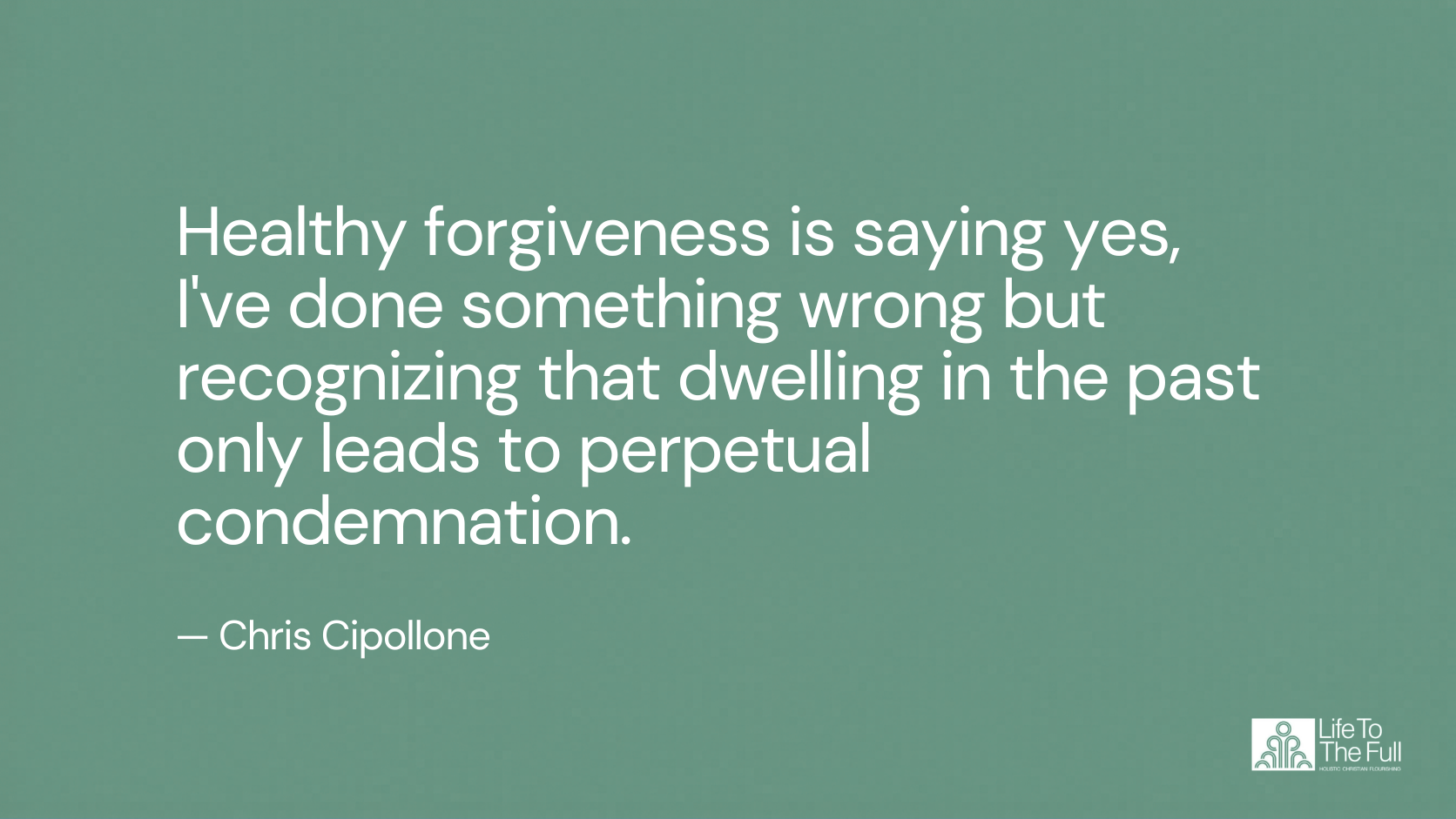
However, true forgiveness does not involve pretending that a transgression did not occur. Instead, healthy forgiveness requires acknowledging that a wrong was done to oneself, to God, or to another person.
At its core, this process involves recognizing that the past action cannot be changed. Once we accept this reality, forgiveness transforms into a commitment to pursue a path of future growth , working toward healthier future choices.
To help untangle the complex web of guilt, it is often helpful to separate our internalized fears from clinical and spiritual realities:
| The Shame-Driven Myth | The Clinical & Spiritual Truth |
|---|---|
| I must endlessly punish myself to prove my remorse. | Endlessly ruminating on past mistakes is unproductive and prevents constructive progress. |
| I cannot be forgiven because my failure is uniquely terrible. | Experiencing guilt is a common human condition; recognizing you are not alone can help alleviate shame. |
| Self-forgiveness means I am glossing over my mistakes. | Forgiveness means acknowledging your wrongdoing and choosing psychological productivity and growth over stagnation. |
The Hidden Toll of Unresolved Guilt
When we refuse to let ourselves off the hook, the damage spills over into our everyday lives in ways we might not initially recognize. A clinical look at the consequences of unresolved guilt reveals several destructive patterns:
Erosion of Self-Confidence:
Persistent guilt often results in lowered self-confidence and passive behaviour in both work and personal relationships.
The Trap of Defensiveness:
A significant, less obvious consequence of failing to forgive oneself is the development of defensiveness. When individuals cannot show themselves grace, they may react to external criticism with anger or sulking.
Deep Relational Isolation:
This defensive behaviour naturally pushes loved ones away, which ultimately leads to isolation. This resulting loneliness only fuels further feelings of guilt, creating a painful, self-perpetuating spiral.
Mental and Emotional Exhaustion:
Guilt does not just sit quietly; it resides in distorted, confused, and hyperactive thought patterns that drain our psychological reserves.
Practical Steps to Break the Cycle
Healing from massive regret is draining, and it is natural to wonder how long the pain will last. While there is no fixed timeline because the process depends on the nature of the transgression and your individual personality, you can actively accelerate your healing.
Here are four concrete, actionable steps to help you ground yourself and find grace in the heat of the moment:
Utilize the "Third-Party" Thought Experiment:
When guilt feels intense, ask yourself what advice you would give to another person in the exact same position. Because we are often more critical of ourselves than others, projecting the situation onto a third party allows us to realize we would advise them to let go and move on.
Engage in Talk-Based Therapy:
Participating in therapies like Cognitive Behavioural Therapy (CBT) can meaningfully support your healing process. This type of therapy helps clients slow down and actively unpack the distorted or hyperactive thought patterns associated with their guilt.
Practice Safe, Community Confession:
If you are a believer, utilize the practice of confessing sins to trusted friends within your community. Being in a relationship with others allows you to get outside of your own head and bounce your thoughts off someone who genuinely cares for you.
Meditate on Unconditional Grace:
Look toward theological frameworks, such as the Parable of the Prodigal Son, to understand that a loving parent's love exists irrespective of performance. Grasping this concept can help you extend that same unconditional compassion toward yourself.

Moving Forward with Support
Navigating the deep waters of shame, theological disconnects, and psychological distress takes immense courage. You do not have to carry this heavy burden on your own.