
You are sitting on your couch when an unexpected text lights up your phone. It is your manager, and the message simply says, "Can we chat tomorrow morning in my office?"
In a matter of seconds, your heart begins to pound, your stomach drops, and your mind is flooded with a very specific, detailed scenario. You are convinced you are being fired. You can already see yourself packing up your desk, losing your income, and facing complete financial ruin. You haven't even stepped foot into the office yet, but your nervous system is already reacting as if the absolute worst has happened.
This exhausting spiral isn't just ordinary worry. It is the heavy, physical burden of catastrophic thinking.
What Happens in Your Body and Mind?
When we are caught in a doom spiral, the experience is rarely just mental. It is deeply physical. The internal monologue you are speaking to yourself rapidly escalates into physiological sensations.
This might look like a sudden wave of anxiety, butterflies in your stomach, or breaking out into a sweat. It often leads to a completely sleepless night where you lie awake preparing for eight different conversations that may happen the following morning. By the time you actually walk into the office, you are already entirely convinced that your life is about to come crashing down.
The Hidden Payoff: Why We Overthink
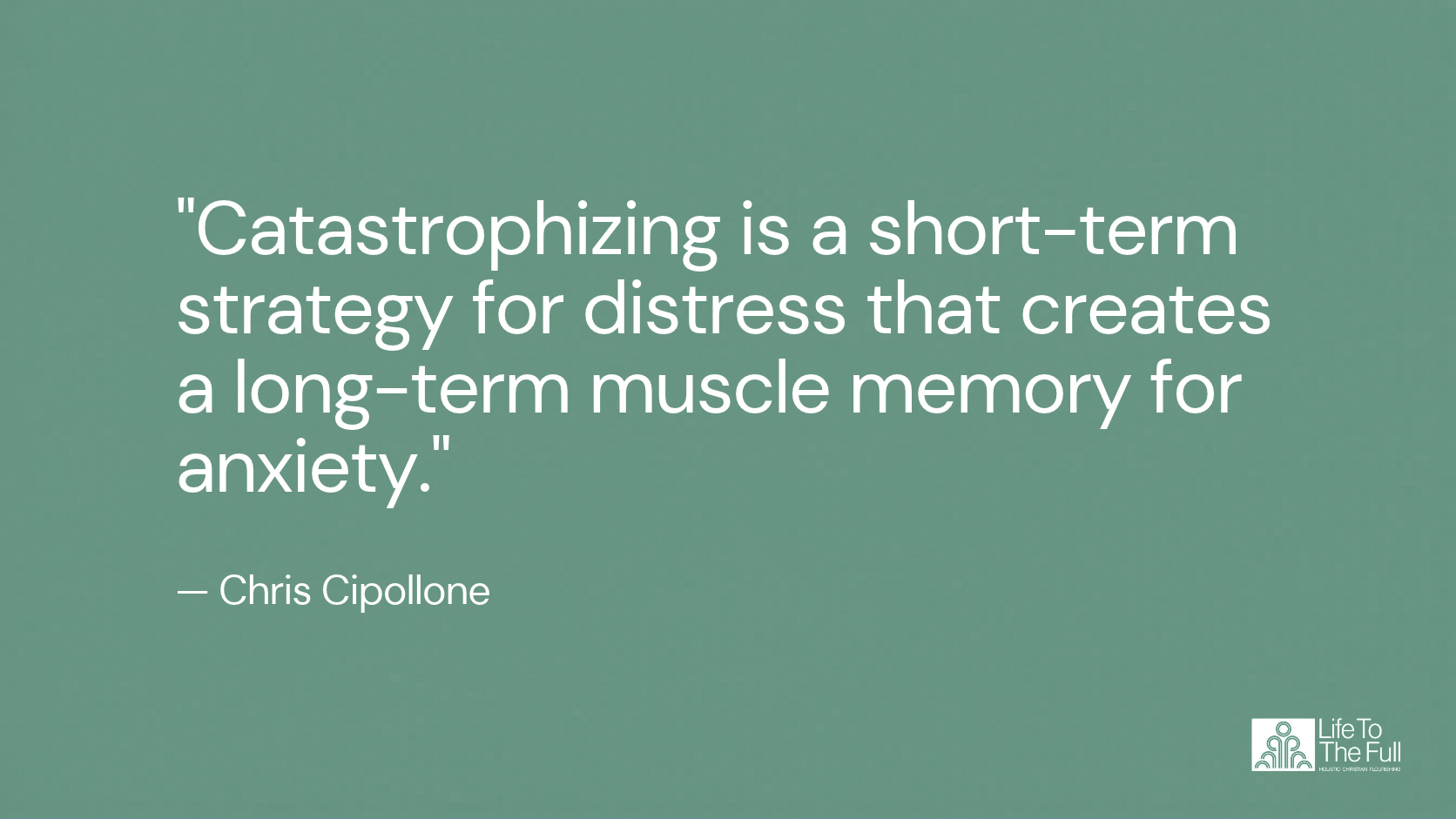
When we feel this level of anxiety, our minds desperately search for a sense of control. The behaviour of over-analysing actually functions as a short-term strategy to provide temporary relief from anxiety.
When you spend hours navigating every possible worst-case scenario, what you are actually doing is seeking reassurance. By mentally rehearsing every single disastrous outcome, it feels like you are covering your bases. If you have four doom scenarios in your head, your brain might invent a fifth one just to ensure you have a defence prepared for every possibility, providing a fleeting sense of safety.
The Long-Term Cost: A Muscle Memory for Anxiety
However, this coping mechanism carries a severe hidden cost. While navigating endless worst-case scenarios might provide a brief, false sense of reassurance, it ultimately creates long-term pain and a deep muscle memory for anxiety.
To break free, we must understand the hidden psychological drivers that keep this exhausting cycle in motion:
The Illusion of Preparedness:
We trick ourselves into believing that if we can imagine the worst-case scenario and mentally prepare for it, we won't be caught off guard or hurt when it actually happens.
Deep-Rooted Muscle Memory:
Every time we engage in this extensive mental rehearsal, we train our nervous system to naturally default to panic. This system makes it significantly harder to stop the spiral the next time around.
Past Traumas and Experiences:
Actual traumas or painful events from our personal history such as a tragic loss at a young age significantly increase our vulnerability, teaching our brains to view the world through a lens of danger.
Family Origin Stories:
Growing up with critical parents or in an environment where mistakes were heavily penalized can hardwire the subconscious belief that negative outcomes are inevitable and just waiting to happen.
Taking the Next Step: Actionable Relief
Understanding the psychological drivers behind your fear is a gentle, powerful first step toward healing. But if you are looking for ways to actually untangle these anxious patterns in your everyday life, we want to walk alongside you.
If you often find yourself assuming the worst and want to learn how to gently separate a mere possibility from a definite outcome, we invite you to explore [How to Stop Catastrophizing Daily].
Or, if you are looking for comforting ways to anchor your nervous system when panic rises and want to see how to hold onto your faith without feeling guilty for your fear you might find peace in our thoughts on [Grounding Techniques for Managing Fear].
Finding Peace and Professional Support
Recognizing these psychological drivers is the first step toward untangling the shame and exhaustion that accompany them. If catastrophic thinking is starting to impact your daily flourishing, you don't have to navigate it alone.
At Life To The Full, our multidisciplinary team of counsellors, psychologists, and spiritual directors is here to help you understand and gently dismantle these anxious patterns. Whether you prefer in-person sessions or online support, taking that first step toward care can help you rewrite your internal narrative and find lasting peace.