
We all experience worry from time to time. You might step onto a busy street and feel a brief flash of concern about the traffic, which is a completely rational, legitimate thought.
But what happens when that fleeting thought becomes an absolute certainty that disaster is striking right now?
Understanding how to stop catastrophizing daily begins with recognizing exactly where healthy concern ends and the anxiety spiral begins.
Ordinary Worry vs. Definite Doom
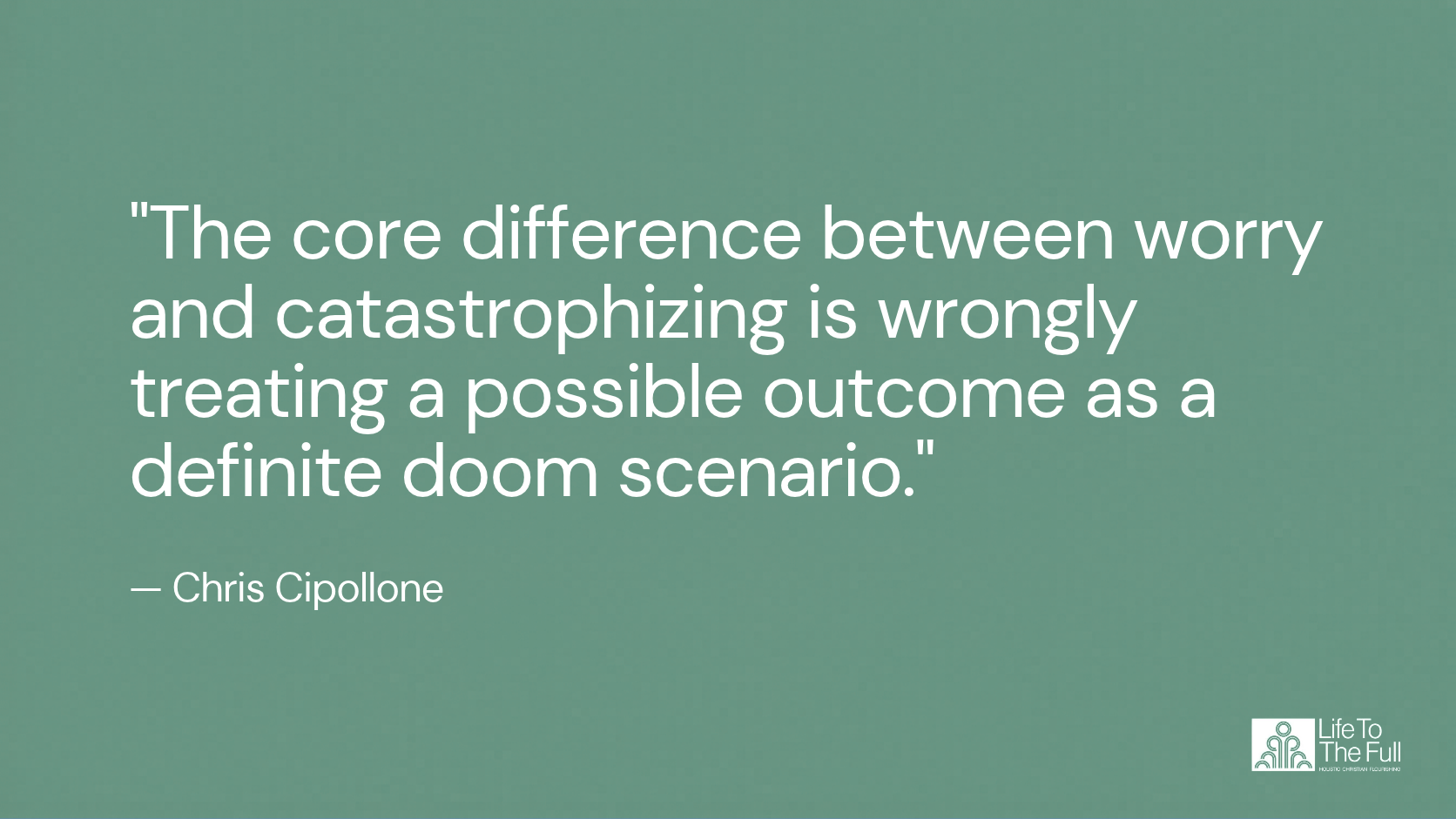
The core problem distinguishing catastrophizing from ordinary worry is the scale of probability. Catastrophizing takes a possible outcome and wrongly treats it as a probable or definite doom scenario.
For example, if your employer asks for a meeting without context, it is possible that you are being fired. But automatically assuming that termination is the absolute, definite reality is where the thought process becomes a catastrophe.
When we are trapped in this cycle, our internal monologue escalates rapidly, bringing on intense physical anxiety symptoms, sleepless nights, and exhausting mental preparation for a crisis that hasn't actually arrived.
The Myth vs. The Truth
To untangle this exhausting habit, it is helpful to look at the clear contrast between what our anxious mind tells us in the moment and what is actually, clinically true:
| The Myth (Anxiety's Narrative) | The Truth (Clinical & Logical Reality) |
|---|---|
| Because a bad outcome is possible, it is absolutely probable. | The possibility of an event does not equal its mathematical probability. |
| Rehearsing every disaster prepares me and keeps me safe. | Mental rehearsal only provides short-term relief while reinforcing long-term anxiety patterns. |
| My physical panic means the threat is real and happening right now. | Somatic symptoms are a physiological response to an internal story, not a present danger. |
Practical Steps to Break the Cycle
Learning how to stop catastrophizing requires actively catching these myths in real-time. It takes intention to interrupt the panic before it takes over your entire day. Here are actionable, practical steps you can take to halt the doom spiral:
Evaluate the Scale of Probability: Stop and remind yourself that just because something could happen, it doesn't mean it will happen. Actively separate the mere possibility of an event from the actual mathematical likelihood of it occurring.
Monitor Your Somatic Responses: Notice the physical signs in your body like a knot in your stomach, sweating, or a racing heart and recognize them as a physiological stress response to a story in your head, rather than a prophetic warning of reality.
Refuse to Feed the "Next Scenario": When your brain tries to invent a fifth or sixth worst-case scenario just to feel prepared, actively choose not to give that thought any more oxygen, breaking the short-term gratification cycle.
Assess the Cost to Your Flourishing: Use a simple litmus test: evaluate what this constant fear is costing you in terms of your daily functioning, joy, and peace. If it is prohibiting your flourishing, it is time to seek professional intervention.
Taking the Next Step Toward Healing
Breaking free from the daily habit of expecting the worst takes time, intention, and patience. If you find that trying to stop this cycle on your own isn't working, our team at Life To The Full offers a comprehensive approach to healing.
With access to compassionate counselors, psychologists, and spiritual directors through both online and in-person care, we provide the practical tools you need to reclaim your peace of mind and live fully.