
How to Stop 'Performing' for God and Start Resting in Him
Many of us live with a nagging sense that we are constantly "on stage," trying to earn a standing ovation from God. We treat our faith like a performance review, worried that if we don’t pray long enough, serve hard enough, or stay "good" enough, we will lose our standing with Him.
This cycle of religious perfectionism is exhausting, but it stems from a fundamental misunderstanding of how God actually sees us. Breaking free begins with recognizing that our relationship with the Creator isn’t a ladder to be climbed, but a foundation to rest upon.
Escaping the Trap of the "Meritocracy"
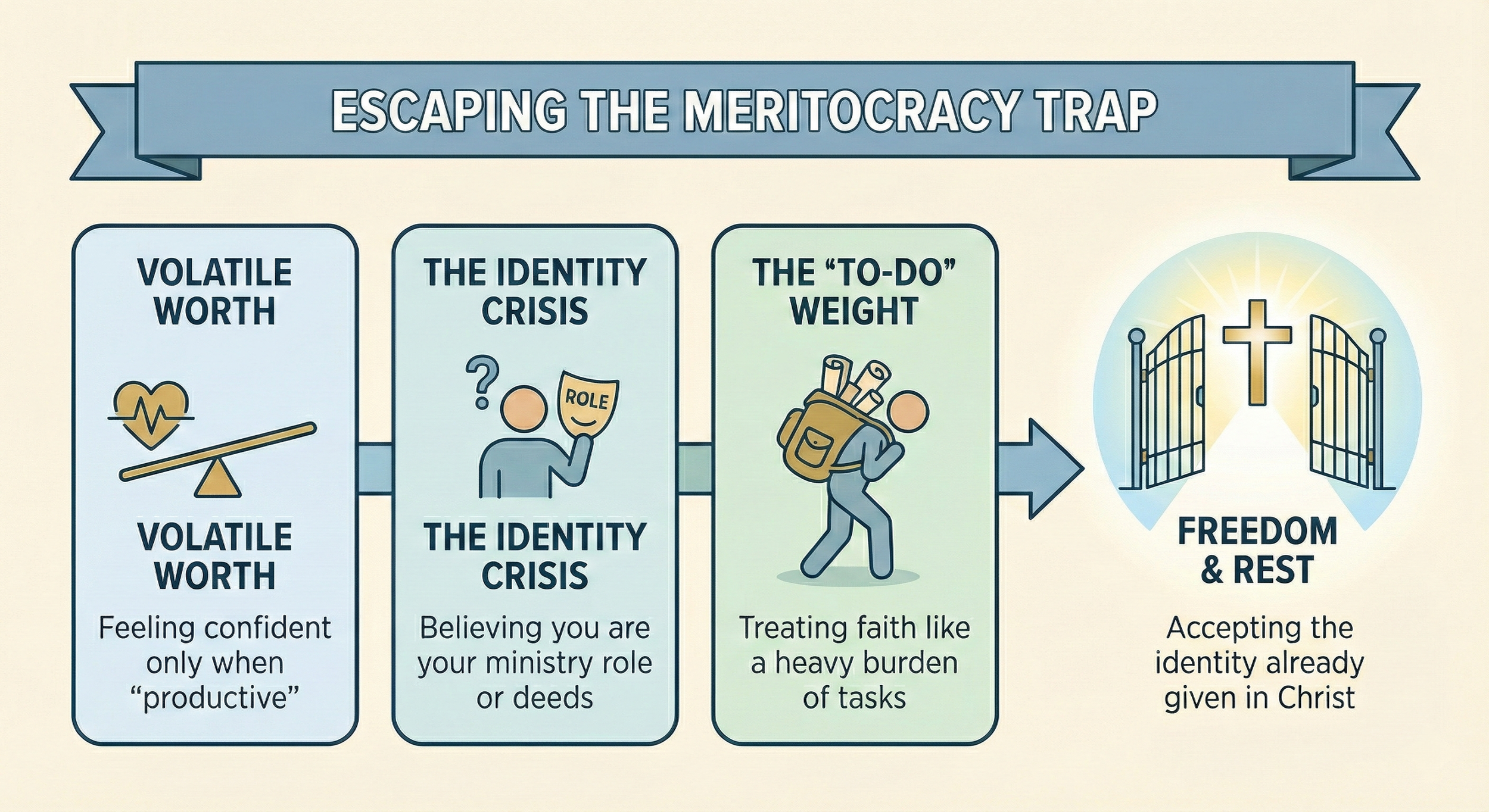
We live in a world that operates as a meritocracy. From school grades to workplace promotions, we are conditioned to believe that our value is tied directly to our output and achievements.
Unfortunately, it is incredibly easy to drag this "earn-your-keep" mindset into our spiritual lives. When we do this, we functionally believe that we are defined by what we do whether that is being a devoted parent, a hard-working ministry leader, or a "perfect" Christian.
To see if you've fallen into this trap, look for these signs:
Volatile Worth
Feeling confident when you're "productive" for God, but worthless when you feel sluggish or fail.
The Identity Crisis
Believing you are your ministry role or your list of good deeds.
The "To-Do" Weight
Treating your faith like a heavy backpack of tasks rather than a source of energy.
Overcoming religious perfectionism starts with the radical realization that you are not ultimately what you do. Freedom is found when we stop trying to build an identity based on our own abilities and start accepting one that has already been given to us.
3 Ways to Stop 'Performing' for God and Start Resting in Him
1. Shifting Your Identity from Employee to Child
To stop performing, we have to reorient our hearts away from our "to-do" lists and toward our true identity. The Bible tells us in 1 John 3:1 that we are "beloved children of a perfectly loving heavenly Father."
There is a massive difference between an employee and a child. An employee’s position is secure only as long as they perform; a child’s position is secure because of who they are.
Your identity as a child of God is secure because it doesn't rely on your ability to keep your act together. It rests entirely on the faithfulness of God and what Christ has already accomplished. When you truly grasp that you are loved not for your "goodness" but because of His grace, the pressure to perform begins to melt away.
2. Service as "Spiritual House Money"
One of the most common ways we fall back into performance is by using our service to others as a way to "self-justify." We jump straight into helping, fixing, and doing, hoping that our busyness will make God happy with us. But when we prioritize serving our neighbours before we truly learn to love and be loved by God, we quickly become "self-justifying active people" who end up burnt out.
Grace-based living flips this script. God was already happy with you before you ever did a single thing for Him. He took the first step to love us while we were still sinners, not when we finally "got our act together."
When we understand this, our service stops being a heavy burden and becomes what is known as "playing with spiritual house money." We serve out of the abundance of already being loved, rather than a desperate attempt to be liked.
3. The Sabbath: Your Physical Declaration of Trust
If you want a practical way to break the cycle of perfectionism, the practice of the Sabbath is perhaps the most underrated spiritual tool available. Sabbath is more than just a nap; it is a tactical strike against the meritocracy.
Relinquishing Control
Taking a Sabbath forces you to admit that the world is still spinning and it’s not on your axis it’s on God’s.
True Soul Rest
God didn’t rest because He was tired; He rested because He was satisfied. Sabbath reminds you that you can be "worthily spent" without having achieved a single thing that day.
By intentionally switching off, you are physically declaring that you trust God to provide your daily bread. It reinforces the truth that your life is not defined by your schedule, but by God’s satisfaction in you.
Prayer: From Audition to Honest Conversation
Religious perfectionism often ruins our prayer lives because we feel we have to "put on an act." We worry about using the right words, being articulate enough, or following a specific formula to be heard. But if God already knows your heart and your plight, there is no need to perform.
Restful prayer is simply honest conversation. It is dropping the mask and being unpolished. Sometimes, the most authentic and restful prayer you can offer is a simple groan or a cry of "God, help me." When we stop trying to impress Him, prayer transforms from a chore into a place of refuge. You can rest in the knowledge that He accepts your honest thoughts, even when they are messy.
At Life to the Full, we offer a safe, non-judgmental space where you can drop the performance and simply wrestle with God.