
Christian Psychologist vs. Christian Counsellor: Which One Do You Need?
Choosing the right support for your mental health is a vital step toward restoration. Understanding the clinical distinctions between these roles ensures you navigate your journey with both clarity and confidence.
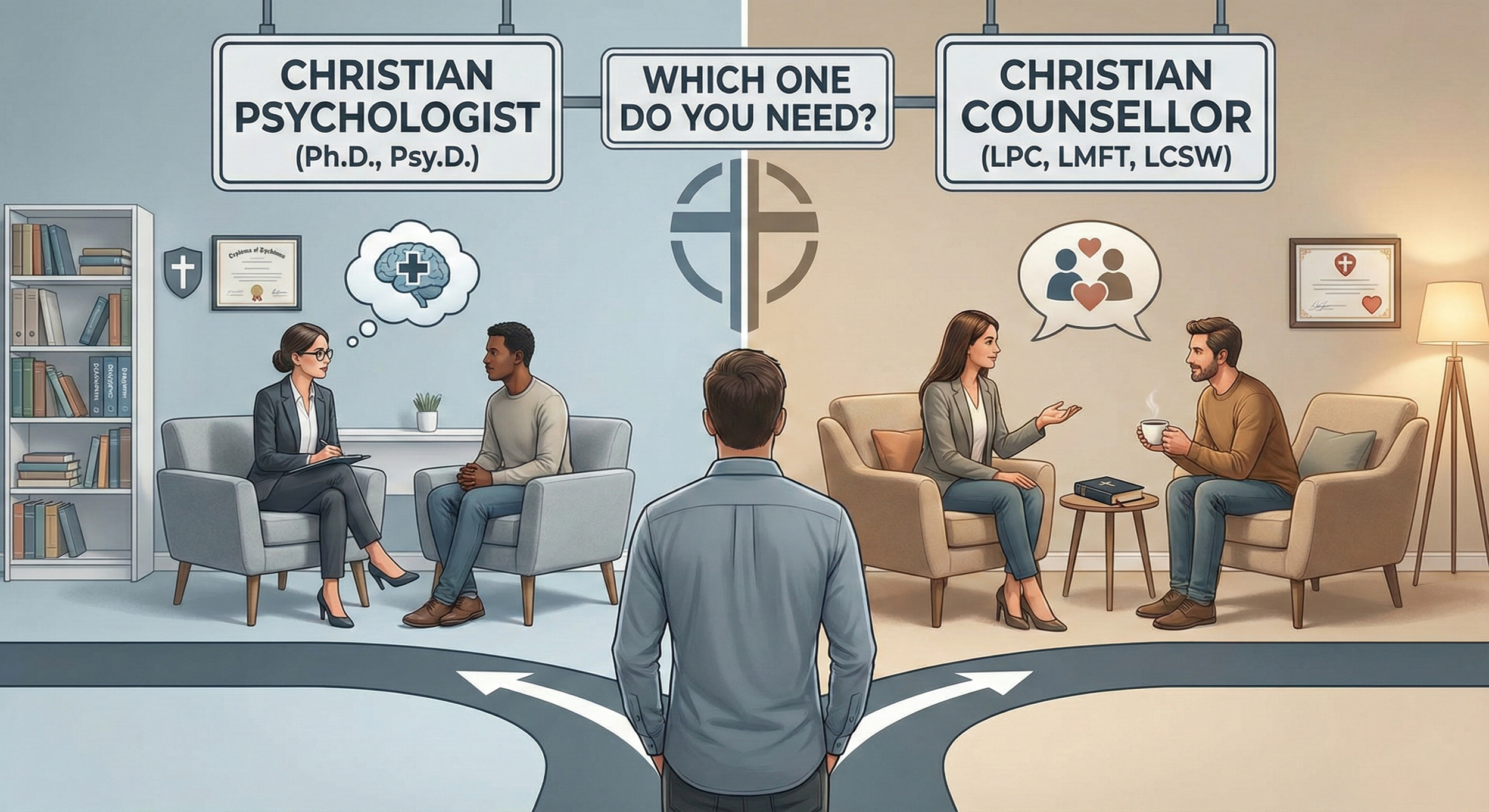
The Core Distinction: Clinical Scope & Diagnosis
The fundamental difference between a psychologist and a counsellor lies in their professional training and clinical scope:
Psychologists:
These are highly trained professionals uniquely equipped to provide formal clinical assessments. They can officially diagnose and treat complex mental health disorders such as clinical depression, anxiety, bipolar disorder, or complex trauma.
2. Counsellors:
While they provide significant help for a wide range of mental health issues, they generally do not have the formal capacity to provide clinical diagnostic assessments.
Why "Psychologists who share a Christian Worldview"?
In the professional clinical world, the term "Christian psychologist" can sometimes be seen as an oxymoron because a psychologist’s practice must prioritize evidence-based therapy.
At Life to the Full, we use the phrase "psychologists who share a Christian worldview". This highlights that while our practitioners are people of faith, their therapeutic approach remains scientifically grounded in proven, science-backed modalities such as:
ACT (Acceptance and Commitment Therapy)
EMDR (Eye Movement Desensitization and Reprocessing) for specialized trauma work
The "Existential Layer" of Faith
What truly sets a practitioner with a Christian worldview apart is the ability to add an "existential layer" to these scientific tools.
For example, within a standard CBT framework, your psychologist might invite you to consider:
Where is God in this specific moment of trauma?
How does the hope of the resurrection inform your current struggle?
Reducing "Friction" Through Shared Values
One of the greatest benefits of faith-integrated therapy is the reduction of "friction". In a secular setting, a therapist might inadvertently suggest solutions that clash with your spiritual values such as suggesting you leave your church or spouse as a primary solution.
A practitioner who shares your faith understands the nuances and obligations of a Christian worldview. This creates a mutual language that often leads to deeper trust and better therapeutic outcomes.
Identifying the Best Path for You
The best choice depends entirely on the specific nature of your current struggle:
Psychologist: Recommended for individual clinical challenges, mental health disorders, or complex diagnoses like Borderline Personality Disorder (BPD) and clinical depression.
Counsellor: Best suited for relationship issues, marriage counselling, and navigating complex family dynamics.
Spiritual Director: Ideal for those specifically struggling with spiritual doubts, faith crises, or hurt resulting from church experiences.
Collaborative Care & The Right Fit
At Life to the Full, healing is a team effort. While you might initially select a practitioner based on their bio, our clinical team works together to ensure you are with the right expert. If, after an initial session, it becomes clear that a different specialization such as moving from a counsellor to a psychologist for a complex diagnosis would better serve your healing, we will make that recommendation to ensure your care is perfectly tailored to your unique story.